
Ethylene Oxide (ETO) Testing
Ethylene oxide testing detects residual levels of ETO and its by-products in food and related products to ensure safety, regulatory compliance, and consumer protection.

[Detailed Description ]
Ethylene Oxide Residue Testing for Food Safety and Compliance
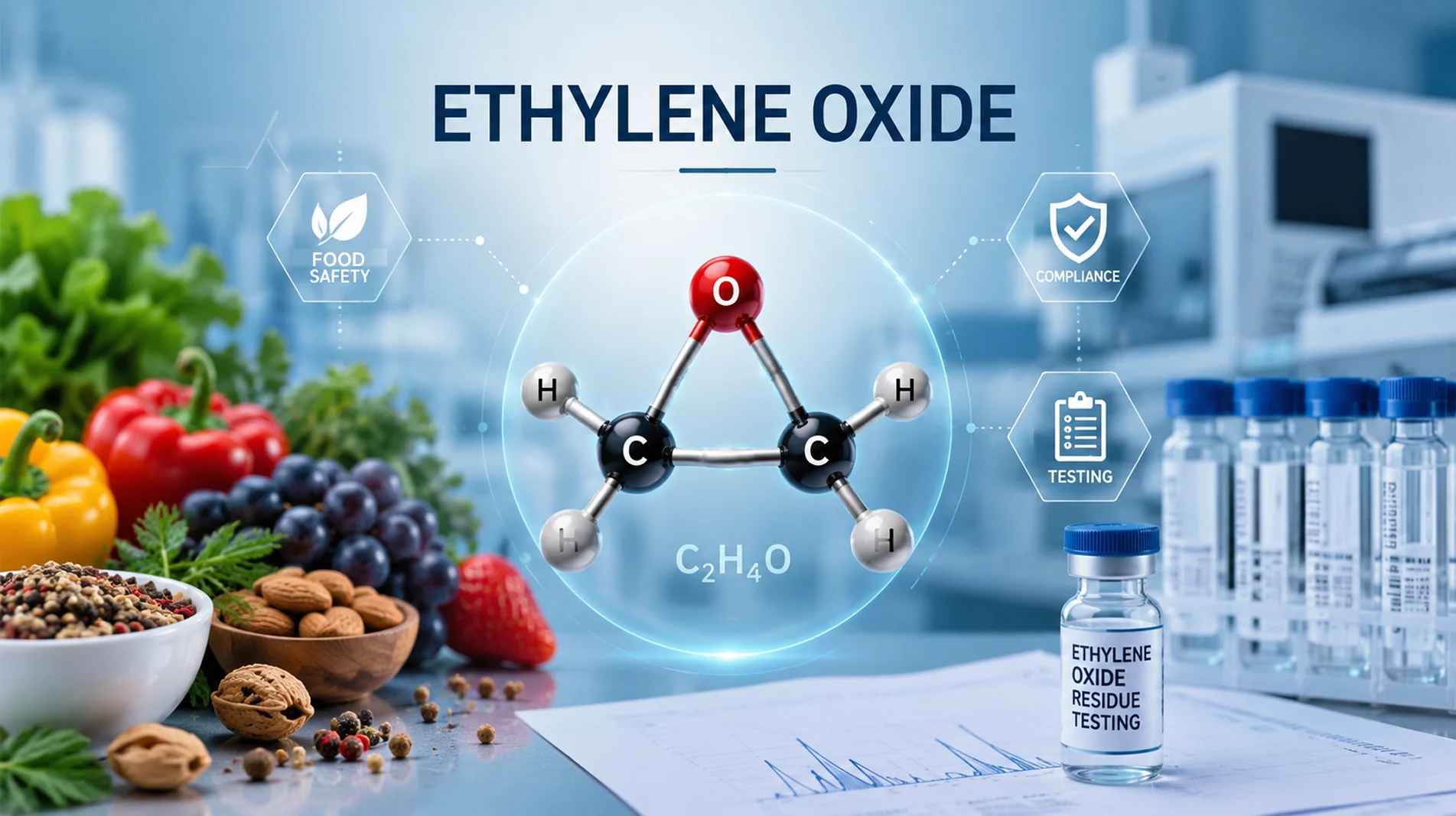
Ethylene Oxide (ETO) testing is a specialized analytical service used to detect and quantify residues of ethylene oxide and its derivative compounds, such as 2-chloroethanol, in food products, spices, herbs, seeds, and other agricultural commodities. ETO is widely used as a sterilizing agent for microbial control; however, its residues are strictly regulated due to potential health risks.
Advanced analytical techniques such as GC-MS/MS and GC-HS are employed for sensitive and accurate detection of ETO residues at trace levels. These methods enable reliable identification and quantification of both ethylene oxide and its metabolites in complex matrices.
This testing is critical for ensuring compliance with stringent international regulations, particularly in export markets where ETO residues are either restricted or prohibited. It helps identify contamination sources during processing, storage, or sterilization treatments.
All analyses are performed using validated methods under ISO/IEC 17025, ensuring accuracy, traceability, and reliability of results.
Key Parameters Covered

Ethylene Oxide (ETO)

2-Chloroethanol (ETO metabolite)

Total ETO Residue (ETO + derivatives)
Significance
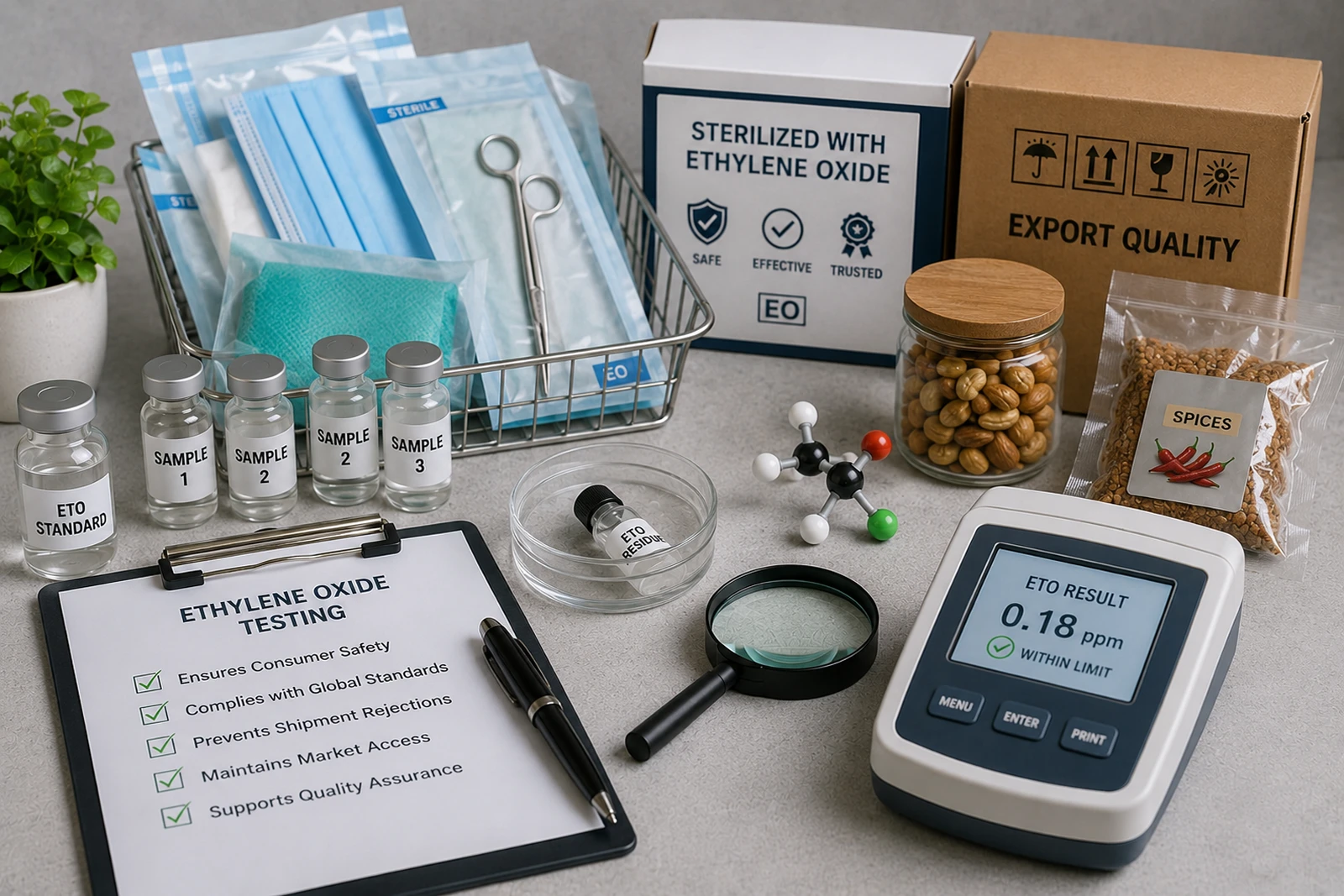
Ethylene oxide testing is essential to safeguard consumer health by ensuring that harmful sterilant residues are within permissible limits. Excessive exposure to ETO has been associated with potential carcinogenic and toxic effects, making its monitoring critical. This testing helps manufacturers and exporters comply with international standards, avoid shipment rejections, and maintain market access. It also supports quality assurance by identifying contamination sources and ensuring safe processing practices.

[FAQ]
Frequently Asked Questions
What is Ethylene Oxide testing?
Ethylene Oxide testing is an analytical process used to detect and measure ETO and its related residues in food products, spices, herbs, seeds, and agricultural commodities.
Why is ETO testing important?
ETO testing is important because ethylene oxide residues are strictly regulated due to potential health risks. Testing helps ensure product safety and regulatory compliance.
Which products require ETO testing?
Commonly tested products include spices, herbs, seeds, food ingredients, agricultural commodities, and export-related food products.
What is 2-Chloroethanol?
2-Chloroethanol is a derivative or metabolite associated with ethylene oxide residue and is commonly tested along with ETO.
Does ETO testing support export compliance?
Yes. ETO testing helps exporters meet international residue requirements, reduce shipment rejection risks, and maintain access to regulated markets.
Ethylene Oxide Analysis
Partner with BAS for accurate Ethylene Oxide (ETO) testing services to detect and quantify ETO residues in food products, spices, herbs, and other commodities. Our advanced analytical methods help ensure regulatory compliance, product safety, and seamless access to global markets.