
Cosmetics & Essential Oil

[Product Groups]
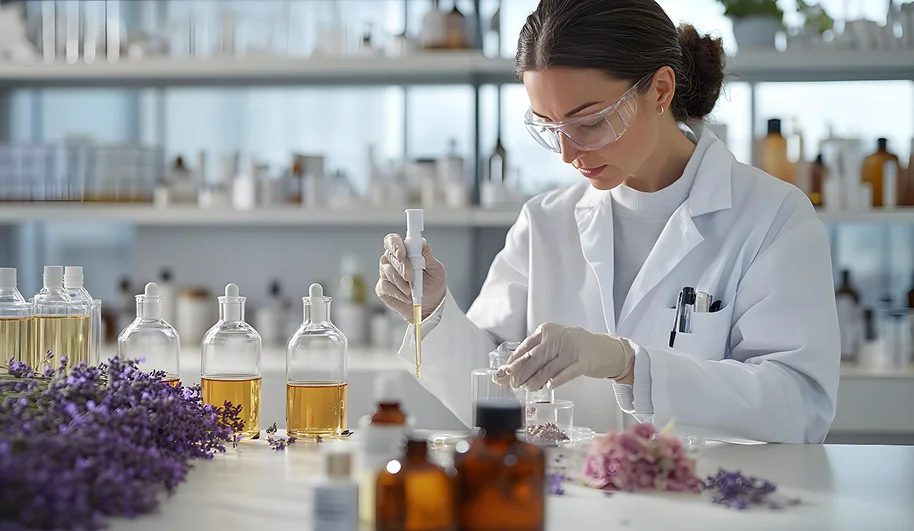
Testing of cosmetics, hygiene products, and essential oils ensures consumer safety, product stability, and regulatory compliance. Microbiological testing verifies the absence of harmful microorganisms, while preservative efficacy testing ensures that products remain safe throughout their shelf life.
Chemical analysis identifies allergens, contaminants, and restricted substances, supporting compliance with cosmetic regulations. Stability studies ensure that product quality, appearance, and performance remain consistent under different storage conditions.
These evaluations are critical to prevent adverse reactions, ensure product reliability, and maintain consumer trust and brand integrity.
Hygiene Products
Microbiological testing of hygiene products is essential to ensure their safety and effectiveness for regular use. These products are often exposed to conditions that may promote microbial contamination, making quality control critical.
Testing evaluates the antimicrobial performance of the product, confirming its ability to reduce or inhibit microorganisms such as bacteria, yeast, and molds. It also includes microbial limit testing to ensure the absence of harmful or pathogenic contaminants.
Preservative efficacy testing is conducted to verify that the formulation can resist microbial growth during storage and repeated use, especially in products containing water. Overall, this testing ensures product safety, maintains quality and stability, and supports compliance with regulatory standards while protecting users from potential health risks.
Cosmetics
Microbiological testing of cosmetics is essential to ensure product safety, quality, and stability. Since many cosmetic products contain water and are used directly on the skin, they are susceptible to microbial contamination.
Testing includes microbial limit testing to confirm the absence of harmful microorganisms such as bacteria, yeast, and molds. It also involves preservative efficacy testing to ensure the formulation can effectively control microbial growth during storage and use.
Additionally, testing helps verify that products remain stable and safe throughout their shelf life without causing infections or adverse effects on the skin. Overall, microbiological testing supports consumer safety, maintains product quality, and ensures compliance with regulatory standards.
Essential Oils
Microbiological Testing
Microbiological testing of essential oils is important to ensure their purity, safety, and quality, especially when used in cosmetics, pharmaceuticals, and food applications. Although essential oils possess natural antimicrobial properties, contamination can still occur during processing, storage, or handling.
Testing includes microbial limit analysis to detect the presence of bacteria, yeast, and molds, ensuring the product is free from harmful microorganisms. It also verifies that the oil maintains its integrity and does not support microbial growth when blended or diluted.
Overall, this testing helps ensure product safety, preserves quality, and supports compliance with regulatory standards.
[FAQ]
Frequently Asked Questions
Why is microbiological testing important for cosmetics and hygiene products?
Microbiological testing helps ensure that cosmetics and hygiene products are free from harmful microorganisms, safe for consumer use, and compliant with regulatory standards.
What is preservative efficacy testing?
Preservative efficacy testing evaluates the ability of a product’s preservative system to prevent microbial growth during storage and regular use, especially in water-based formulations.
Why are essential oils tested for microbiological quality?
Essential oils are tested to detect microbial contamination that may occur during processing, storage, or handling, ensuring product purity, safety, and quality.
What types of contaminants are checked in cosmetic testing?
Cosmetic testing may include analysis for bacteria, yeast, molds, allergens, restricted substances, heavy metals, and other contaminants that could affect product safety or stability.
How does testing support product quality and compliance?
Testing helps manufacturers verify product safety, stability, shelf life, and regulatory compliance while maintaining consumer trust and consistent product performance.
Trusted Cosmetics & Hygiene Product Testing
Ensure the safety, stability, and quality of cosmetics, hygiene products, and essential oils with our comprehensive microbiological and chemical testing services. Our expert solutions help validate product performance, preservative effectiveness, and regulatory compliance while protecting consumer health and brand reputation.