Fatty Acid Profile & Cholesterol Testing
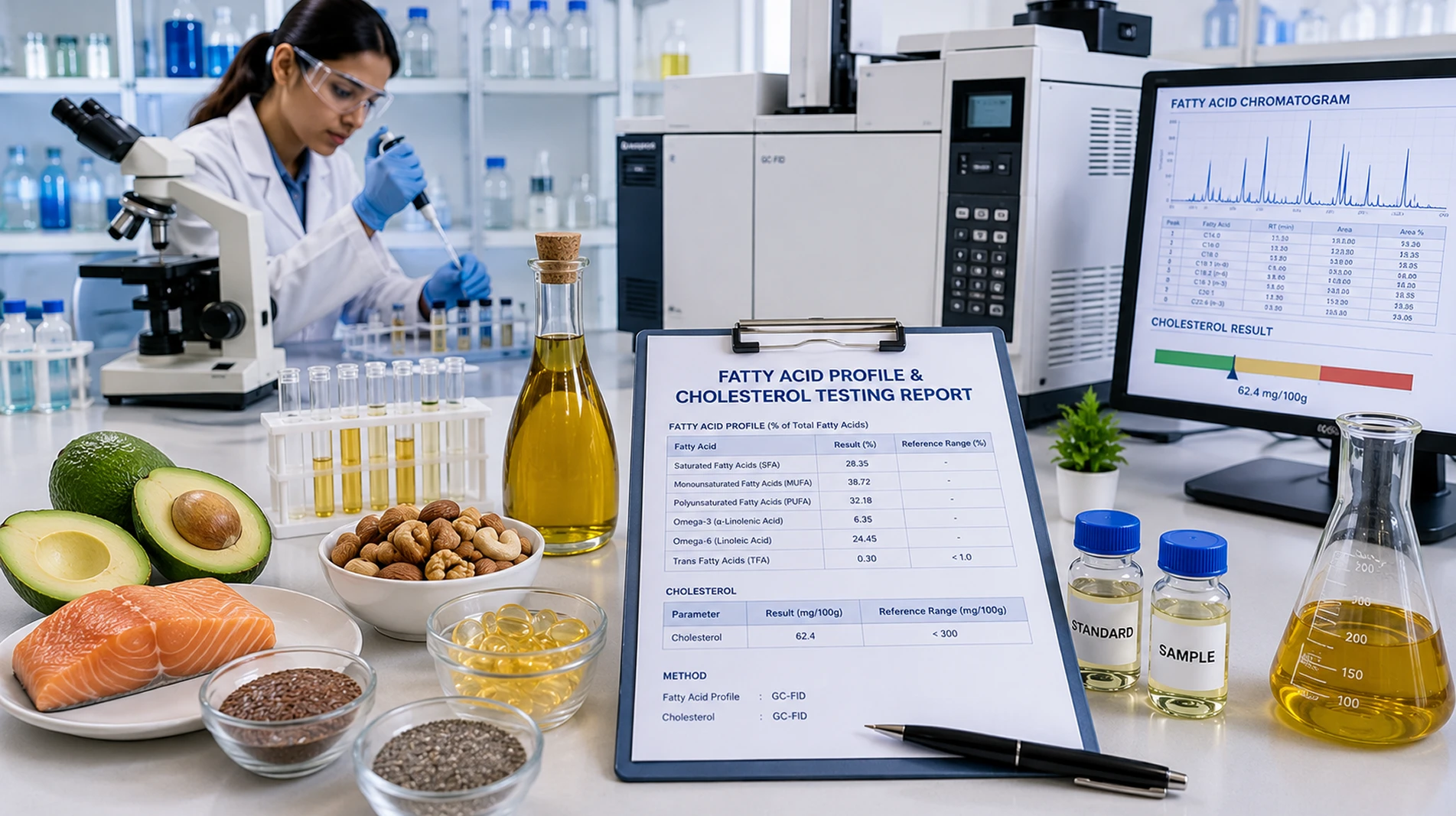
Fatty acid profile and cholesterol testing evaluates the composition of fats and lipid fractions in food and biological samples to ensure nutritional quality, regulatory compliance, and health-related claims.
[Detailed Description ]
Advanced Fatty Acid Profile & Cholesterol Analysis
Fatty acid profile and cholesterol testing is a specialized analytical service used to determine the composition and distribution of lipids in food products, edible oils, dairy, meat, nutraceuticals, and biological samples. This analysis provides critical insights into nutritional quality, product authenticity, and the health impact of lipid-containing products. Fatty acid profiling involves the identification and quantification of key lipid fractions, including saturated fatty acids (SFA), monounsaturated fatty acids (MUFA), polyunsaturated fatty acids (PUFA), trans fats, and essential fatty acids such as omega-3 and omega-6. These parameters are crucial for evaluating nutritional value, oxidative stability, and their role in human health.
The analysis is performed using advanced techniques such as Gas Chromatography (GC-FID/GC-MS) /GC-FID, after derivatization into fatty acid methyl esters (FAME), ensuring accurate separation and quantification of individual fatty acids, even at trace levels. Cholesterol estimation determines the total cholesterol content in food products, which is a key parameter for nutritional labelling and assessment of dietary risks associated with cardiovascular health. This is particularly important for products such as dairy, meat, processed foods, and functional foods. Our BAS comprehensive testing services support manufacturers, producers, and exporters in ensuring product quality, validating label claims, and complying with regulatory standards such as FSSAI and international guidelines. All analyses are performed using validated methods, ensuring precision, traceability, and reliability of results.

Key Parameters Covered
Comprehensive identification and quantification of fatty acid fractions and cholesterol for nutritional, quality, and compliance assessment.

Saturated Fatty Acids (SFA)
Palmitic, stearic and other saturated fat fractions

Omega-3 Fatty Acids
ALA, EPA, DHA and other essential omega-3 fractions

Monounsaturated Fatty Acids (MUFA)
Oleic acid and related single-unsaturation fractions

Omega-6 Fatty Acids
Linoleic acid and related essential omega-6 fractions

Polyunsaturated Fatty Acids (PUFA)
Linoleic, arachidonic and multi-unsaturated fractions

Total Fat Composition
Complete quantitative fat profile per sample matrix

Trans Fatty Acids
Detection of industrially produced trans fat content

Cholesterol Content
Total cholesterol estimation for labelling and cardiovascular risk assessment
We BAS provide reliable Fatty Acid Profile and Cholesterol testing using advanced techniques such as GC-FID/GC-MS and FAME derivatization to ensure highly accurate and reproducible results, even at trace concentration levels.
Significance
Fatty acid profile and cholesterol testing are essential for evaluating the nutritional quality and health impact of food products. The type and proportion of fatty acids influence cardiovascular health, making it critical to monitor saturated, trans, and essential fatty acids.
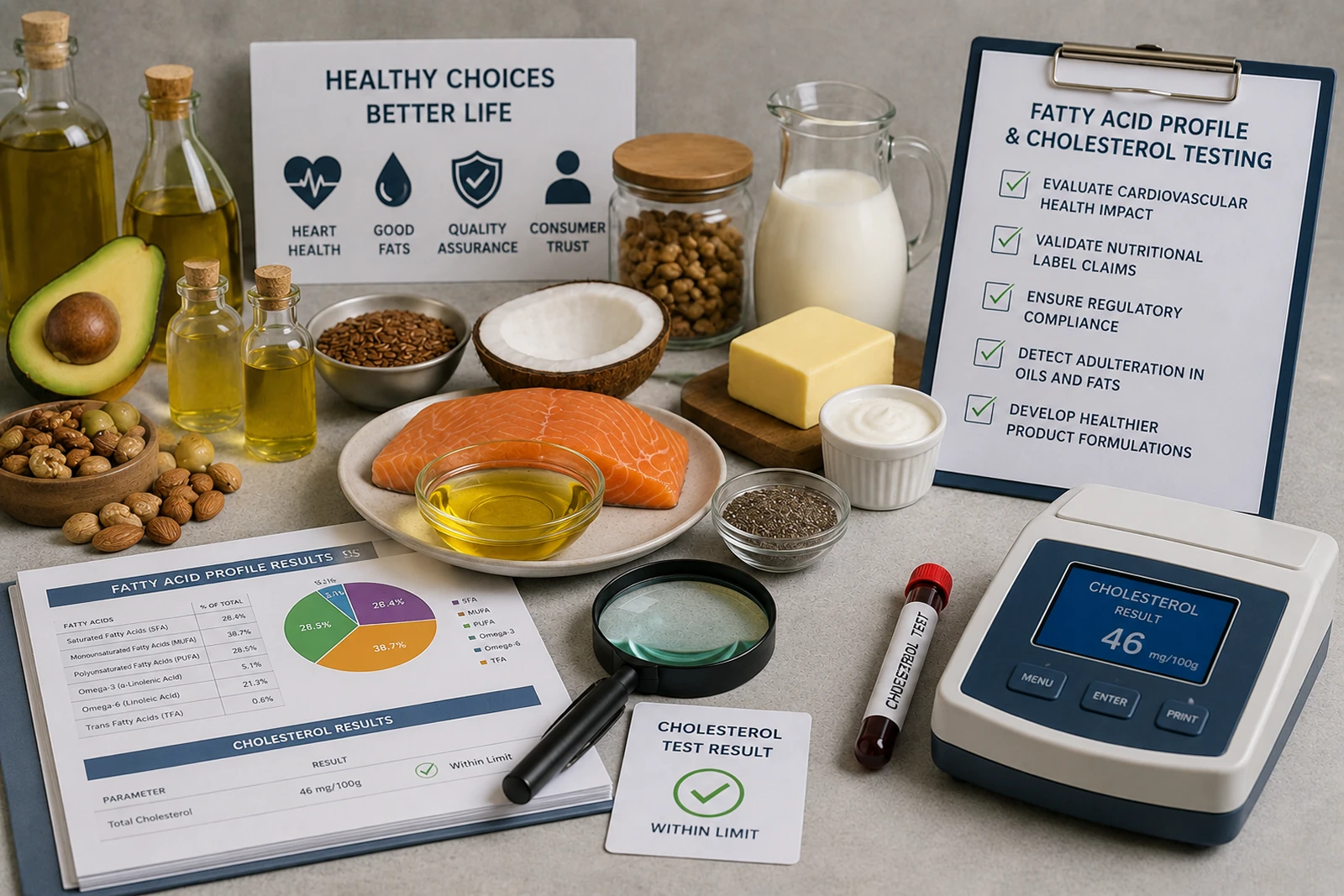
Accurate cholesterol estimation is important for regulatory labelling and consumer awareness, particularly in health-conscious markets. This testing helps manufacturers validate nutritional claims, ensure compliance with standards, detect adulteration, and develop healthier product formulations. It ultimately supports public health and enhances consumer trust.
- Evaluate cardiovascular health impact
- Validate nutritional label claims
- Ensure regulatory compliance
- Detect adulteration in oils and fats
- Develop healthier product formulations
[FAQ]
Frequently Asked Questions
What is fatty acid profiling?
Fatty acid profiling is an analytical process used to identify and quantify the types and proportions of fatty acids present in food products, edible oils, dairy, meat, nutraceuticals, and biological samples. It helps evaluate nutritional quality, product authenticity, and the health impact of lipid-containing products.
Why is cholesterol testing important in food products?
Cholesterol estimation determines the total cholesterol content in food products, which is a key parameter for nutritional labelling and assessment of dietary risks associated with cardiovascular health. It is particularly important for products such as dairy, meat, processed foods, and functional foods.
Which analytical techniques are used for fatty acid profiling?
The analysis is performed using advanced techniques such as Gas Chromatography (GC-FID/GC-MS) /GC-FID, after derivatization into fatty acid methyl esters (FAME), ensuring accurate separation and quantification of individual fatty acids, even at trace levels.
Can fatty acid profiling detect adulteration in edible oils?
Yes, fatty acid composition is highly characteristic of different oil types. Any deviation from the expected fatty acid pattern can indicate adulteration, blending with cheaper oils, or substitution, making it a reliable tool for authenticity verification.
Fat & Cholesterol Testing
Partner with BAS for accurate fatty acid profile and cholesterol testing services. Our advanced analytical methods help determine nutritional composition, support product quality claims, ensure regulatory compliance, and provide valuable insights for food and nutraceutical products.